
Hibiscus plants are loved for their bold flowers, glossy foliage, and tropical garden feel. With the right care, they can be generous, rewarding plants that bring colour to gardens, patios, balconies, courtyards, and pots.
This guide covers the basics of hibiscus care, including sunlight, watering, feeding, pruning, repotting, pest checks, and common problems.
Choosing the right position
Hibiscus plants grow best in a bright, warm position with plenty of light.
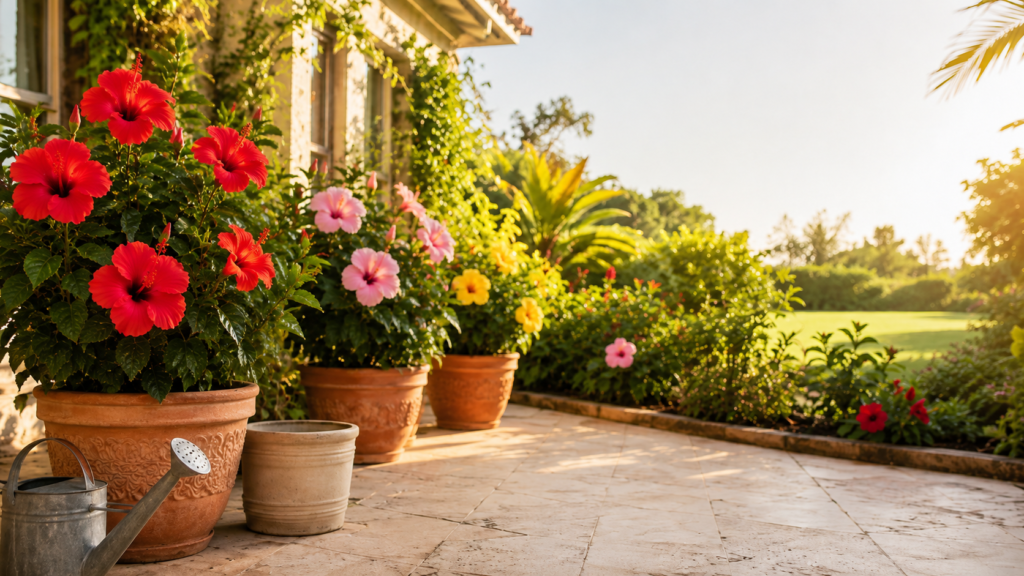
Most tropical hibiscus varieties prefer full sun to part sun. In cooler or mild areas, they usually perform best with as much sun as possible. In very hot climates, they may appreciate some protection from harsh afternoon sun, especially when grown in pots.
A good position is:
- bright and warm;
- protected from strong wind;
- well-drained;
- sheltered from frost;
- easy to water during hot weather.
If your hibiscus is not flowering well, lack of sunlight is one of the first things to check.
Watering
Hibiscus like consistent moisture, especially during warm weather and active growth.
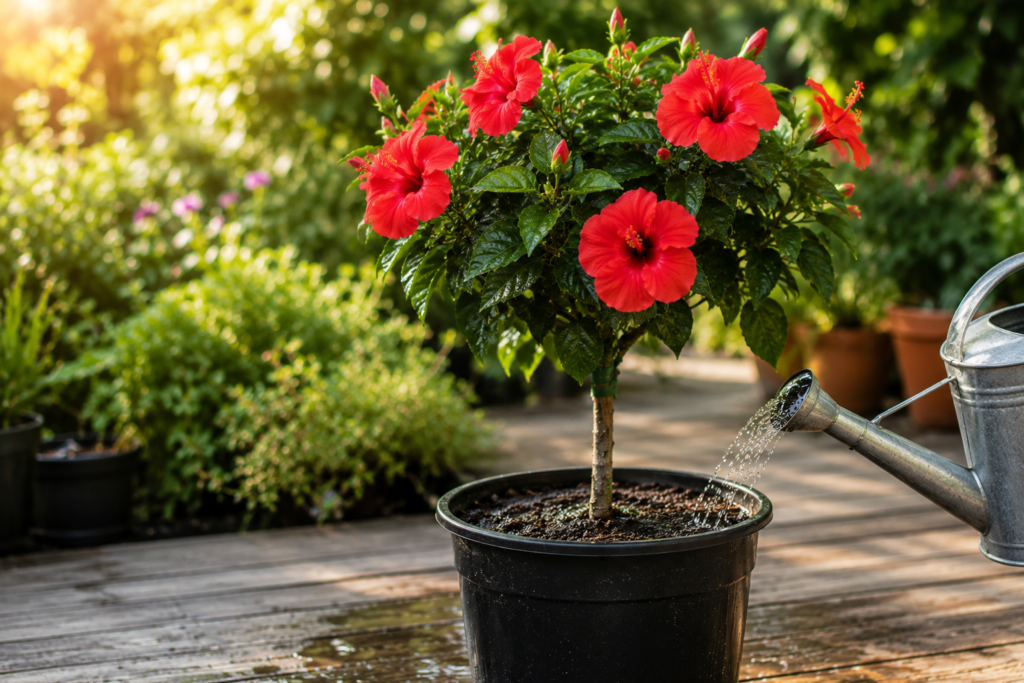
Water deeply when the top layer of soil begins to dry. Potted hibiscus may need watering more often than plants grown in the ground, particularly during hot, dry, or windy weather.
Avoid letting your hibiscus dry out completely for long periods. This can cause wilting, yellow leaves, and bud drop.
At the same time, avoid keeping the soil constantly soggy. Hibiscus like moisture, but they do not like sitting in waterlogged soil.
Watering tips
- Check pots regularly in warm weather.
- Water at the base of the plant rather than over the flowers.
- Make sure pots have drainage holes.
- Empty saucers so the plant is not sitting in water.
- Mulch garden plants to help retain moisture.
Soil and drainage
Hibiscus grow best in fertile, free-draining soil.
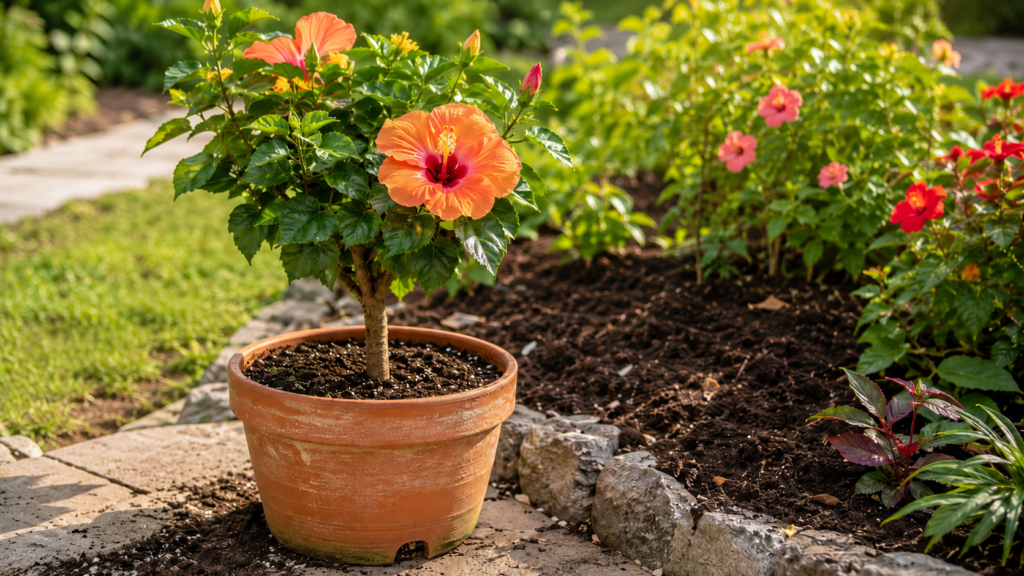
For potted hibiscus, use a quality potting mix suited to flowering shrubs or general outdoor plants. The mix should hold some moisture but still drain well.
For garden planting, improve the soil with organic matter such as compost before planting. Avoid heavy, compacted soil that stays wet for long periods.
Good drainage is important because waterlogged roots can cause plant stress, yellow leaves, root issues, and poor growth.
Feeding hibiscus
Hibiscus are strong growers and heavy flowerers, so they benefit from regular feeding during the growing season.
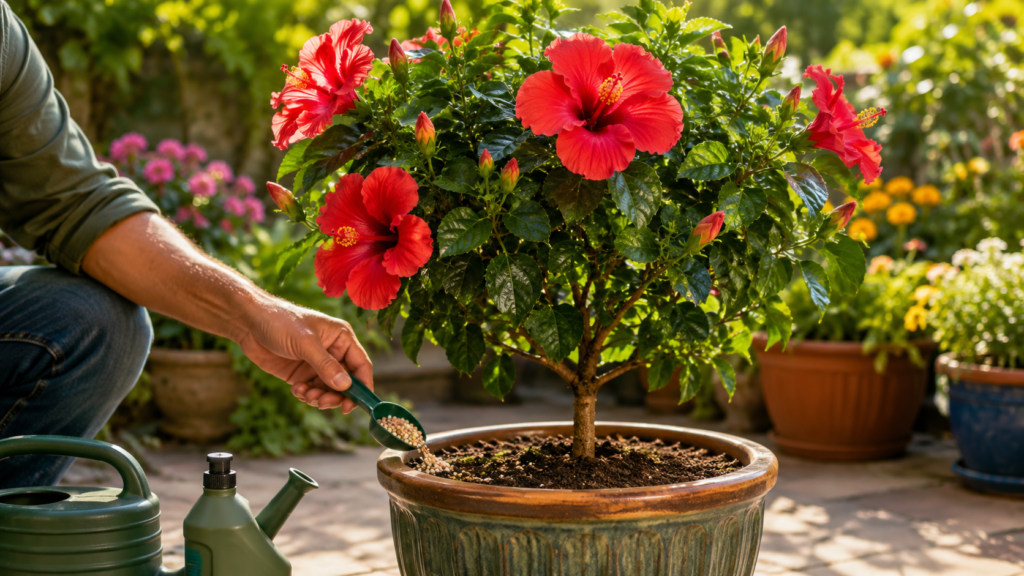
Feed during spring and summer, when the plant is actively growing and producing new leaves and flowers. Use a fertiliser suitable for flowering plants and follow the directions on the label.
Avoid overfeeding, as too much fertiliser can stress the plant or encourage leafy growth at the expense of flowers.
Feeding tips
- Feed more regularly during active growth.
- Reduce feeding during cooler months.
- Water before and after applying fertiliser.
- Follow product directions carefully.
- Do not fertilise a very dry or stressed plant.
Growing hibiscus in pots
Hibiscus grow very well in pots, making them ideal for patios, balconies, courtyards, and smaller gardens.
Choose a pot with good drainage holes. Avoid placing the plant in a decorative pot or saucer where water can collect around the roots.
Potted hibiscus dry out faster than garden-grown plants, so check moisture regularly. They may also need more regular feeding because nutrients wash through potting mix over time.
Repot when the plant becomes root-bound, dries out too quickly, or the potting mix has broken down.
Repotting
Repotting gives your hibiscus fresh growing mix and more room for healthy roots.
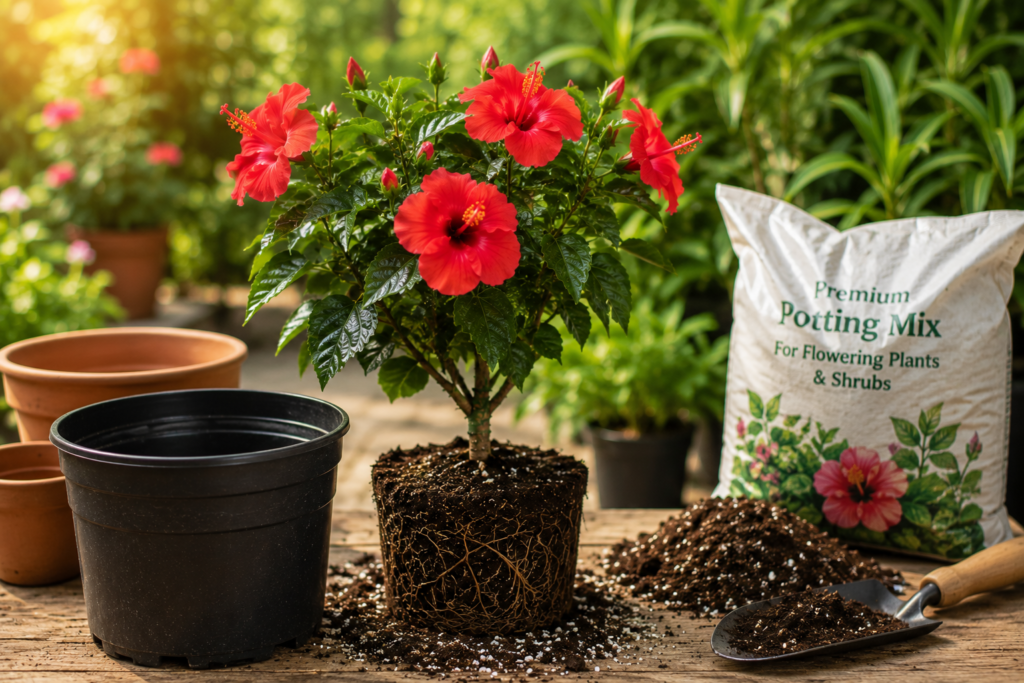
The best time to repot is usually during the warmer growing season, when the plant can recover more quickly.
Choose a pot only slightly larger than the current one. Moving a plant into a very large pot can keep the mix too wet and increase the risk of root problems.
After repotting, water well and keep the plant in a bright, protected position while it settles.
Pruning
Pruning helps keep hibiscus plants healthy, compact, and full of fresh growth. It can also encourage a bushier shape and more flowering stems.
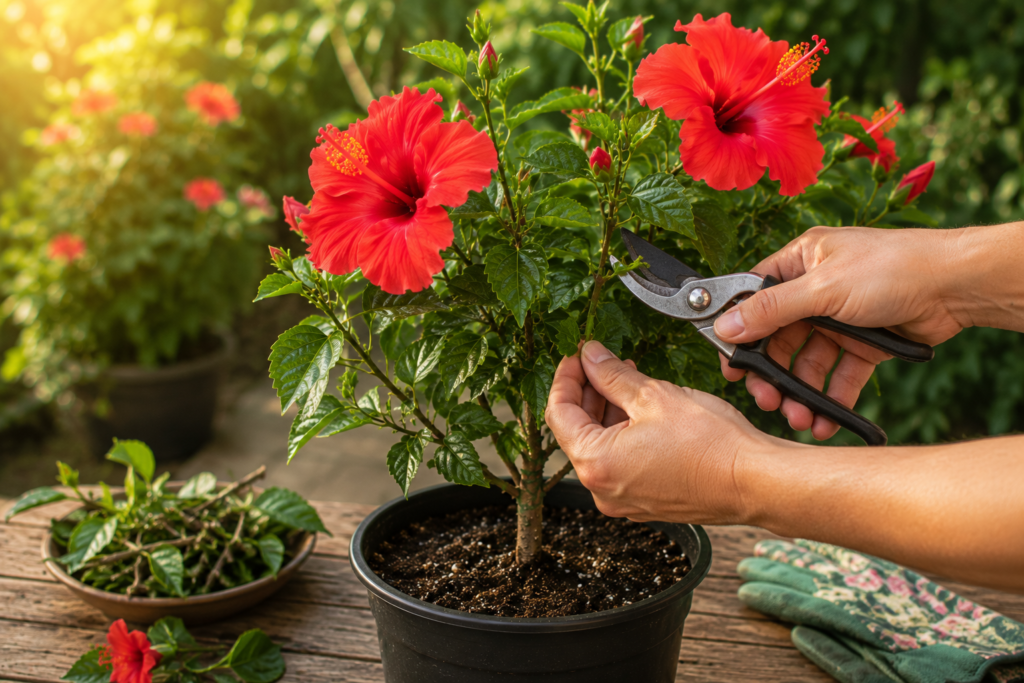
Use clean, sharp secateurs. Remove dead, weak, damaged, or crossing branches first. Then lightly shape the plant as needed.
Tropical hibiscus can usually be pruned during warm weather or at the start of the growing season. Avoid heavy pruning right before cold weather, as fresh new growth can be more vulnerable to cold damage.
Pruning tips
- Use clean, sharp tools.
- Cut just above a node or outward-facing bud.
- Remove dead or damaged growth first.
- Lightly tip-prune to encourage bushiness.
- Avoid removing too much at once from a stressed plant.
Flowers and bud drop
Hibiscus flowers are naturally short-lived. Many blooms last only a day or two, but healthy plants can keep producing new flowers through the growing season.
Bud drop can happen when a plant is stressed. Common causes include:
- inconsistent watering;
- drying out;
- sudden changes in temperature;
- moving the plant to a new position;
- heat stress;
- cold stress;
- pests;
- lack of light;
- recent shipping or repotting.
If buds drop shortly after your plant arrives, give it time to settle. Keep the plant watered, warm, bright, and protected while it adjusts.
Yellow leaves
A few yellow leaves from time to time are normal, especially after transport, repotting, or seasonal changes.
If yellowing becomes widespread, check the most common causes:
- overwatering;
- underwatering;
- poor drainage;
- lack of nutrients;
- sudden temperature changes;
- pest pressure;
- low light;
- natural older leaf drop.
Start by checking soil moisture and drainage. Many hibiscus problems come back to too much or too little water.
Pests and common problems
Hibiscus can sometimes attract common garden pests, especially during warm weather.
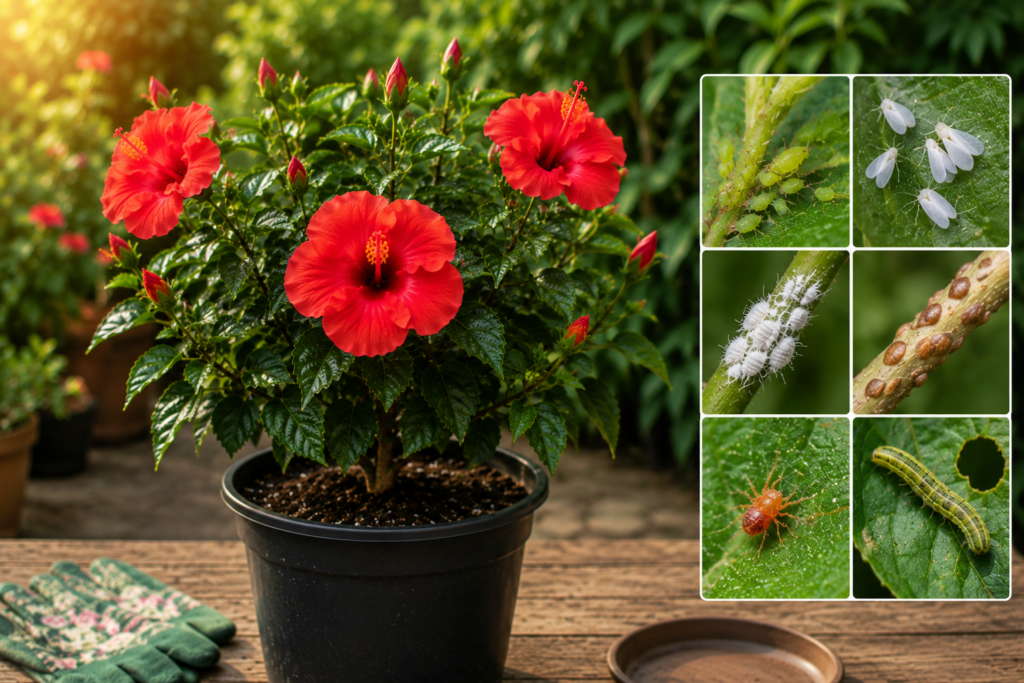
Check regularly for:
- aphids;
- whitefly;
- mealybugs;
- scale;
- spider mites;
- caterpillars.
Look under leaves, around new growth, and near flower buds. Early treatment is much easier than dealing with a large infestation.
If pests are present, isolate the plant if possible and treat with an appropriate garden-safe product. Always follow the product label instructions.
Winter and cold protection
Many tropical hibiscus varieties prefer warm conditions and should be protected from frost.
In cooler climates, hibiscus can be grown in pots so they can be moved to a warmer, more sheltered position during cold weather.
During winter or cooler months, growth may slow and the plant may flower less. This is normal. Reduce feeding and avoid overwatering while the plant is not actively growing.
Cold weather tips
- Protect from frost.
- Move pots to a sheltered position.
- Avoid heavy pruning before cold weather.
- Reduce feeding in winter.
- Water less often if the plant is growing slowly.
After your hibiscus arrives
Your plant may need a little time to settle after shipping or transport. It is normal for a plant to look slightly tired after a journey.
When your hibiscus arrives:
- Unpack it as soon as possible.
- Remove any packaging carefully.
- Check the soil moisture.
- Water if needed.
- Place it in a bright, sheltered position.
- Avoid repotting immediately unless necessary.
- Give it time to adjust before making big changes.
Some leaf yellowing, bud drop, or minor cosmetic damage can happen after shipping. With good care, the plant should settle and continue growing.
Quick care summary
Light: Full sun to part sun
Water: Keep evenly moist, not waterlogged
Soil: Fertile, free-draining soil or quality potting mix
Feeding: Feed during spring and summer
Pruning: Prune in warm weather to shape and encourage growth
Pots: Use pots with drainage holes
Cold: Protect tropical hibiscus from frost
Best for: Gardens, patios, balconies, courtyards, pots, and collectors
Final care note
Hibiscus are living plants, so they naturally change through the seasons. Their growth, flowering, and appearance can be affected by weather, watering, sunlight, pests, pot size, soil, and recent transport.
With warmth, light, regular moisture, good drainage, and a little seasonal feeding, your hibiscus can reward you with beautiful growth and vibrant blooms.